Feature · City Notes
Hannover Messe 2026 Recap: Industrial Transformation and Key Exhibitors
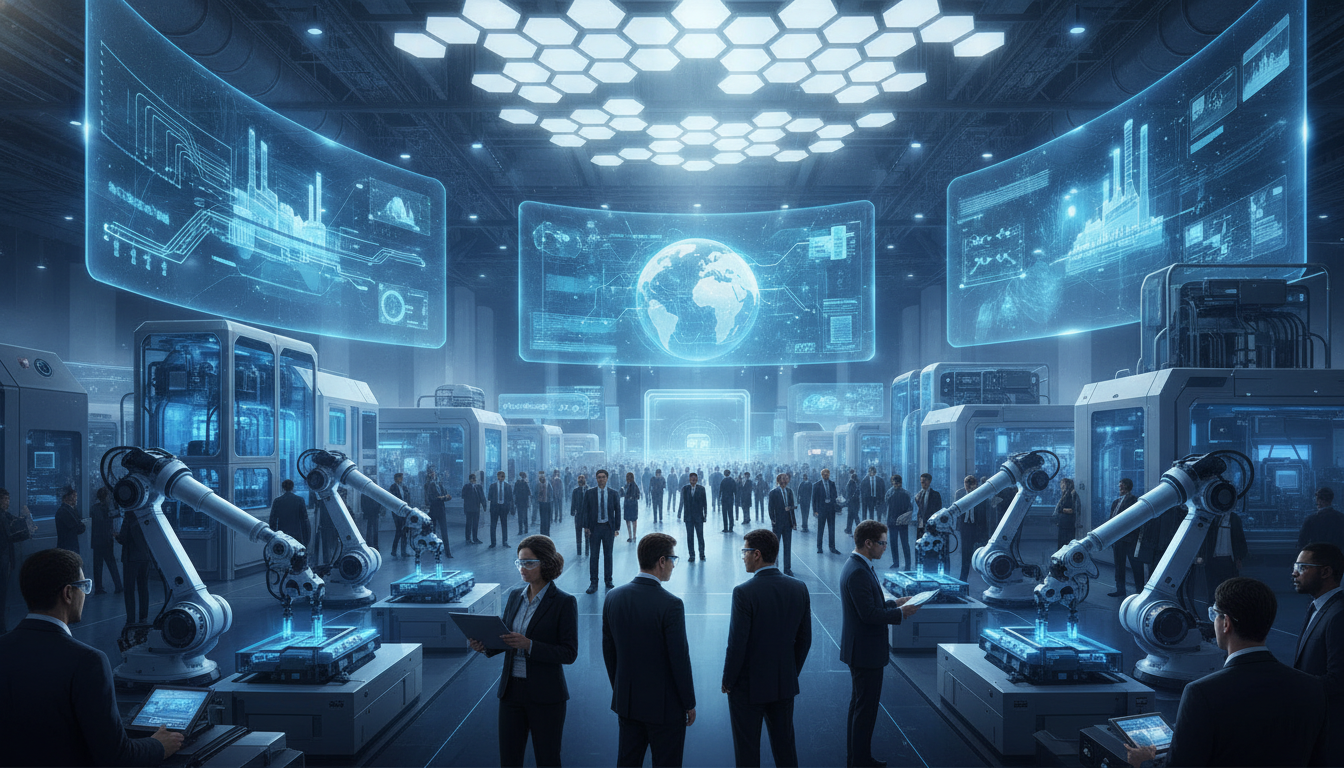
From April 20-24, 2026, the global industrial community converged in Hannover, Germany, for Hannover Messe 2026. Under the motto "Think Tech Forward," this edition, organized by Deutsche Messe AG, placed a strong emphasis on the profound industrial transformation sweeping across sectors. With Brazil as its partner country, the event served as a critical platform for showcasing advancements in digitalization, automation, and sustainable energy solutions that are reshaping global manufacturing and supply chains.
The fair drew over 4,000 exhibitors, all contributing to a vibrant ecosystem focused on enhancing productivity, resilience, and resource efficiency through cutting-edge technologies. Attendees explored a spectrum of innovations, from advanced AI applications to hydrogen technologies, underscoring the rapid pace of change and the imperative for industries to adapt and evolve.
Research Approach and Data Synthesis
Our insights into Hannover Messe 2026 are drawn from a synthesis of official event summaries, news reports, and industry analyses. While a direct, browsable official exhibitor directory for the 2026 event was not readily accessible post-show for detailed company listings including specific hall and booth numbers, the comprehensive reporting on the fair's key themes and prominent participants allows for a robust overview of the exhibiting landscape. This approach ensures that the information presented accurately reflects the event's focus and the contributions of its notable participants, even without direct access to a granular exhibitor catalog.
Driving Industrial Transformation: Key Exhibitors and Innovations
Hannover Messe 2026 was a testament to the ongoing revolution in industrial technology, with exhibitors demonstrating practical applications across various domains. The focus was firmly on moving beyond theoretical concepts to deployable solutions that address real-world challenges in manufacturing, energy, and logistics.
AI, Automation, and Digitalization Leaders
A significant portion of the exhibition was dedicated to companies at the forefront of AI, automation, and digitalization. These players showcased how intelligent systems are being integrated into industrial workflows to drive efficiency and innovation.
- Microsoft: Highlighted agentic AI solutions tailored for supply chain optimization, sales forecasting, and finance teams. Their collaborations, such as with Schneider Electric on agentic manufacturing capabilities powered by Azure AI, demonstrated practical applications for enhanced operational intelligence.
- Siemens: A perennial presence, Siemens focused on its comprehensive digital enterprise portfolio, including industrial software, automation technology, and digital services designed to create seamless, data-driven production environments.
- Amazon: Showcased cloud-based solutions and AI services relevant to industrial applications, emphasizing scalability and efficiency for manufacturing and logistics operations.
- Emerson: Presented its automation solutions, focusing on process control, discrete automation, and software that enhances operational performance and reliability across various industrial sectors.
Advanced Manufacturing and Robotics
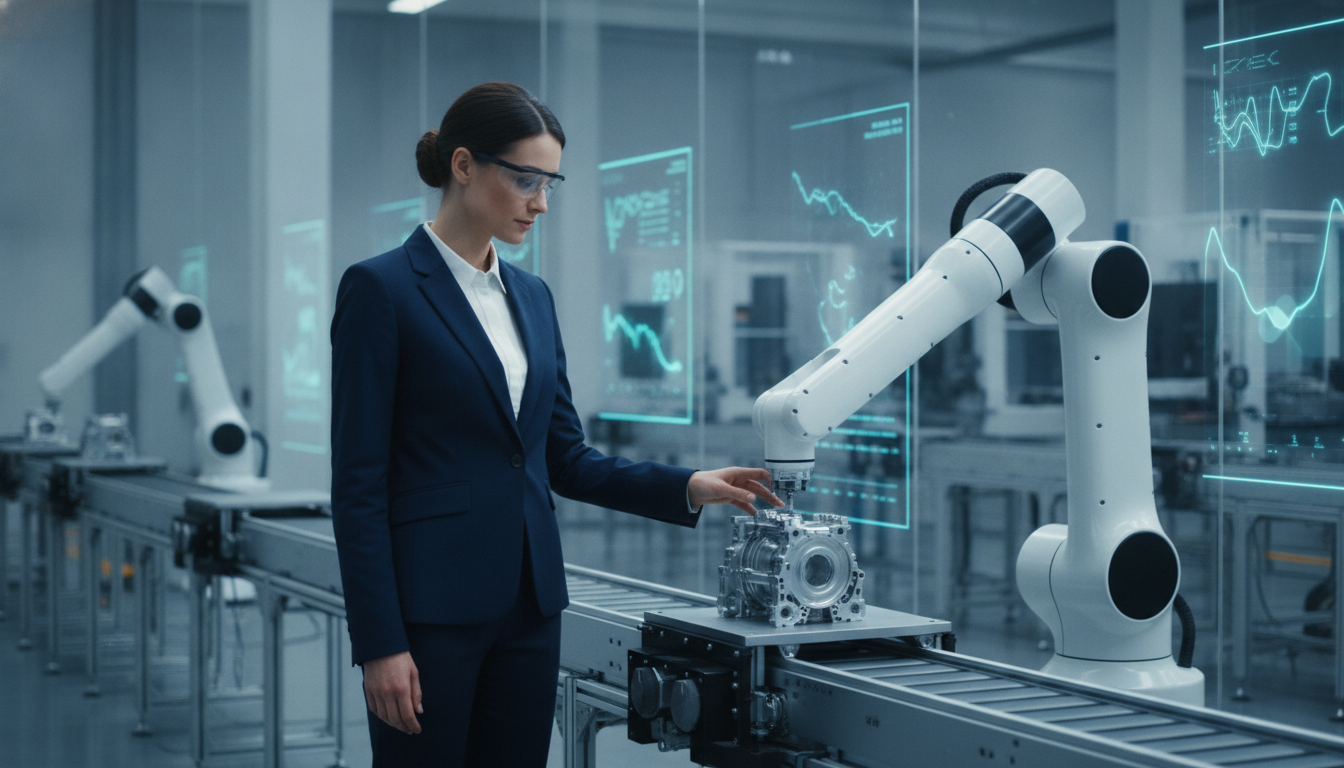
The fair also provided a robust platform for innovations in advanced manufacturing, including robotics, simulation, and digital twins, illustrating the move towards more adaptive and intelligent production systems.
- Dassault Systèmes: Featured their 3DEXPERIENCE platform, showcasing virtual twin experiences for product design, manufacturing, and lifecycle management, enabling comprehensive digital simulation and collaboration.
- Autodesk: Presented software solutions for design, engineering, and manufacturing, with an emphasis on generative design, additive manufacturing, and cloud-connected workflows.
- DMG MORI: Demonstrated advanced machine tools integrated with AI copilots and adaptive machining capabilities, pushing the boundaries of precision and efficiency in production.
- Mazak: Showcased its latest machine tool technologies, emphasizing automation, multi-tasking capabilities, and smart factory solutions for enhanced productivity.
- FANUC: Featured its range of industrial robots and CNC systems, highlighting advancements in vision-guided robotics and collaborative robot applications for diverse manufacturing tasks.
- KUKA: Presented its portfolio of industrial robots and automation solutions, with a focus on intelligent automation, human-robot collaboration, and customized applications for various industries.
- Hexagon: Exhibited solutions for digital reality, including sensors, software, and autonomous technologies that enable precise measurement, quality control, and intelligent manufacturing processes.
- Zeiss: Showcased its industrial quality and research solutions, including advanced metrology systems and deep learning inspection technologies for high-precision manufacturing.
Energy Transition and Sustainable Technologies
The critical theme of energy transition, particularly hydrogen technologies and sustainable energy systems, garnered significant attention, reflecting the industry's commitment to decarbonization.
- Fraunhofer IST: Presented research and development in surface technology, including innovations relevant to hydrogen production, storage, and fuel cell applications.
- Fraunhofer Center for Energy Storage and Systems ZESS: Focused on advancements in energy storage solutions, including battery technologies and systems integration for industrial and grid applications.
- Wasserstoff Campus Salzgitter e.V.: Highlighted collaborative projects and research into hydrogen infrastructure, production, and integration into existing industrial energy systems, promoting a sustainable energy future.
Industry Associations and Ecosystem Enablers
Beyond individual companies, key industry associations also had a strong presence, fostering collaboration and driving the broader adoption of new technologies.
- VDMA (Mechanical Engineering Industry Association): Represented the interests of the mechanical and plant engineering sector, showcasing collective innovations and advocating for digitalization and sustainability within the industry.
- Baden-Württemberg Industry 4.0 Alliance: Highlighted regional initiatives and collaborative projects aimed at advancing Industry 4.0 solutions and fostering innovation among small and medium-sized enterprises.
Hannover Messe 2026 underscored a pivotal moment for industrial transformation, demonstrating that the future of manufacturing is increasingly intelligent, interconnected, and sustainable. The innovations showcased by these and many other exhibitors are not just incremental improvements but foundational shifts in how industries operate.
Which of these key themes or exhibiting companies from Hannover Messe 2026 do you find most impactful for the future of industry?
— End of Story —